How to Choose the Right Led Lightbar for Your Auto?
When selecting the right LED Lightbar Auto, understanding the fundamentals is crucial. The global automotive lighting market is projected to reach $40.7 billion by 2027, with LED technology dominating the scene. Leading expert, Dr. James Carter, states, "Choosing the right light can enhance both safety and visibility."
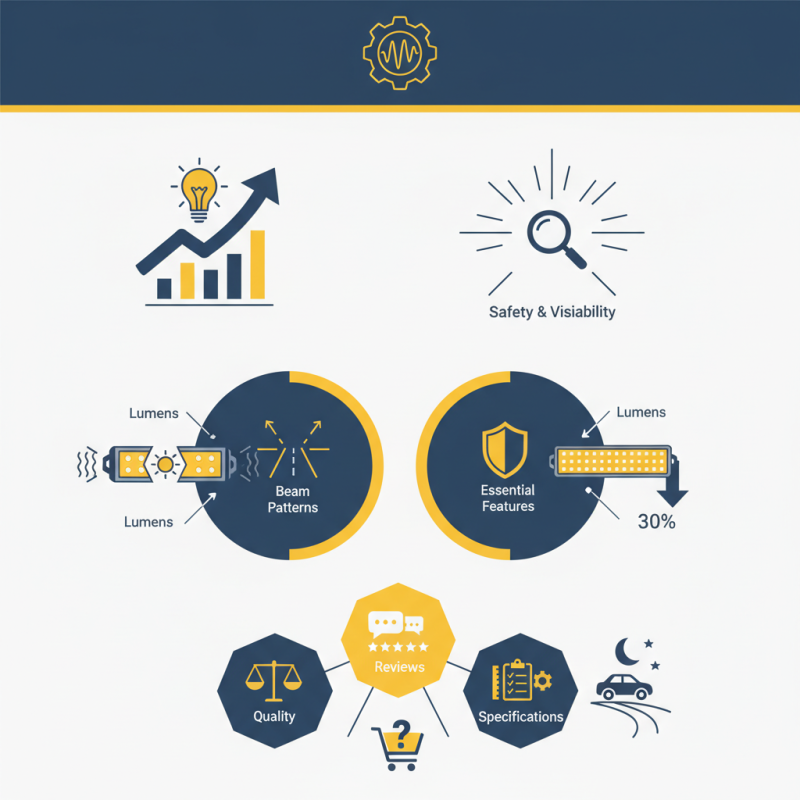
The right LED light bar can ensure improved performance during nighttime adventures. Many drivers overlook essential features, such as lumens and beam patterns. It's essential to consider your specific needs and the conditions you face. Studies have shown that adequate lighting can reduce accident risks by 30%.
While options abound, not all LED Lightbars Auto are created equal. Prices vary widely, so it's vital to choose wisely. Don’t rush the process. Take time to assess quality, reviews, and specifications. Reflect on your requirements and how they align with available products.
Understanding LED Lightbars: Types and Features
LED lightbars have become a popular accessory for vehicles. They come in various types, each tailored for specific needs. Understanding the main types is crucial. Common types include single-row, double-row, and curved lightbars. Each offers distinct beam patterns and brightness levels. For instance, double-row lightbars provide more light output, making them ideal for off-road adventures.
Features are equally important when selecting a lightbar. Factors such as lumens, wattage, and beam angle should be considered. Industry reports indicate that a lightbar with at least 3,000 lumens is effective for nighttime driving. However, many overlook the importance of beam distance. A long-range beam can illuminate a wider area, enhancing visibility. Those who frequently drive in remote areas may prioritize this feature.
Regarding installation and power consumption, simplicity is key. Some lightbars require complex setups, while others offer plug-and-play solutions. Additionally, consumers often underestimate the impact of power draw. Selecting a lightbar with lower wattage can save energy. It's important to balance brightness with power efficiency. Choosing a lightbar involves much more than just brightness; it's about meeting specific driving needs.
How to Choose the Right Led Lightbar for Your Auto? - Understanding LED Lightbars: Types and Features
| Type of Lightbar |
Length (inches) |
Lumens Output |
Beam Pattern |
Water Resistance Rating |
Color Temperature (K) |
| Straight Lightbar |
20 |
4000 |
Flood |
IP68 |
6000 |
| Curved Lightbar |
30 |
6000 |
Combo |
IP67 |
5000 |
| Mini Lightbar |
14 |
2000 |
Spot |
IP66 |
6500 |
| Single Row Lightbar |
24 |
3500 |
Flood & Spot |
IP65 |
5500 |
Assessing Your Vehicle's Compatibility with LED Lightbars
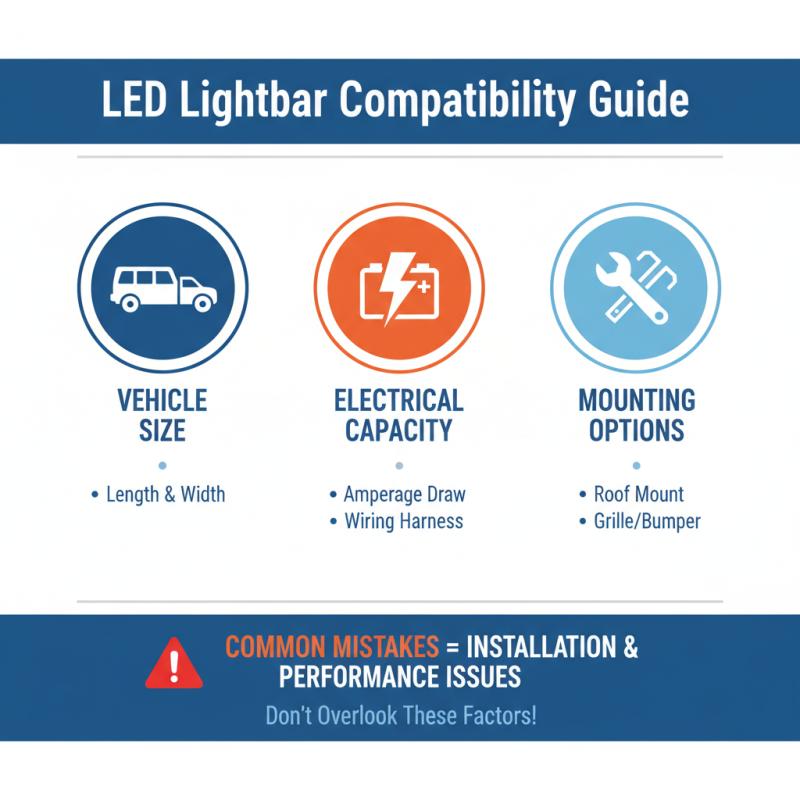
When choosing an LED lightbar for your vehicle, compatibility is essential. The vehicle's size, electrical capacity, and mounting options play critical roles in ensuring a good fit. According to industry reports, many drivers overlook these factors, leading to installation issues and performance problems.
Check your vehicle's electrical system. Experts suggest that the average automotive electrical system can handle up to 16 amps. Lightbars exceeding this can risk damage. Some users install lightbars without knowing their amp requirements, resulting in blown fuses and frustration.
Mounting options also vary widely. Consider where you will place the lightbar. Roof racks are popular, but they may not fit low-profile vehicles. Ensure the mounting brackets match your vehicle's design. Many have faced the challenge of misalignment, affecting the light's angle and visibility. Incorrect mounting can lead to poor illumination, which defeats the purpose of adding a lightbar. Knowing these details can help in selecting the right lightbar for your auto, avoiding common pitfalls many experience.
Determining the Right Size and Brightness for Your Needs
Choosing the right size and brightness for your LED lightbar is crucial. The size affects visibility and installation. According to industry reports, lightbars generally range from 12 inches to 52 inches. A common size for off-road vehicles is around 20 inches. This size balances visibility and aesthetics well.
Brightness is measured in lumens. A typical lightbar can produce between 1,000 to 20,000 lumens. For off-road use, 6,000 to 10,000 lumens offer adequate illumination. However, more lumens don't always mean better performance. In some cases, excessive brightness can create glare. This can reduce your visibility, particularly in fog or rain.
Consider your specific needs. If you drive mostly at night or in remote areas, go for higher lumens. If you're in urban settings, something lower might suffice. Also, think about beam patterns. A flood pattern offers wide illumination, while a spot pattern provides distance. Mixing both can optimize performance. Ultimately, choosing the right size and brightness involves evaluating your driving environment and personal preferences. Consider how these factors might influence your safety and efficiency on the road.
LED Lightbar Size and Brightness Comparison
This chart illustrates the brightness in lumens for different sizes of LED lightbars (inches). As the size increases, the brightness typically increases, allowing for better visibility and performance.
Evaluating Installation Options and Requirements
When considering installation options for a LED lightbar, the vehicle type matters greatly. Some vehicles have limited space on the roof or in the mounting area. It’s crucial to measure this space accurately before making a purchase. Consider the lightbar’s length and mounting style. A clamp-on style may work well for some cars, while a permanent mount might be better for trucks.
Wiring is another essential factor. You’ll need to think about where to run the wires. A clean installation avoids unnecessary clutter and potential damage. Using existing electrical systems can simplify this process, but it may not always be compatible. Ensure you understand your vehicle’s electrical layout. A poorly executed installation can lead to short circuits or failed functionality.
Finally, think about the height and angle of the lightbar. Proper alignment is vital for maximum visibility. Positioning too high or low can result in blind spots or ineffective lighting. Test the light pattern after installation; this ensures safety on the road. Adjustments may be necessary, which can be frustrating. Embrace the process to achieve optimal results.
Comparing Brands and Price Points for Quality Assurance
When choosing an LED light bar for your vehicle, it's essential to consider various brands and their pricing. Different brands offer unique features that cater to diverse needs. Some might focus on higher lumens for better visibility. Others may emphasize durability and waterproof ratings. These aspects can affect the overall price. It's important to weigh the benefits against the cost.
Price points vary widely across brands. Some cheaper options might lack essential features, while pricey counterparts could include advanced technology. It's tempting to go for the lowest price. However, this could lead to disappointing performance or short lifespan. Often, mid-range products strike a balance. They deliver decent quality without breaking the bank.
Delving into product reviews is crucial for quality assurance. Take time to read user experiences. Many consumers find that the most expensive light doesn’t always deliver the best performance. Conversely, a lesser-known brand might surprise you with exceptional quality. Remember, it's not just about the price, but the value you receive. Reflecting on what matters most to you can guide your decision-making process.