How to Choose the Best LED Lights for Your Car?
When selecting the best LED lights car lights, it's crucial to consider various factors. Industry expert John Matthews advises, "Quality and brightness are key when choosing car lights." LED lights enhance visibility and style. However, not all options are created equal.
Many drivers overlook essential details. For instance, the color temperature affects performance. A cooler hue often yields brighter illumination. But it may not suit everyone's taste. Additionally, compatibility with your vehicle is vital. Some lights may not fit standard fixtures.
Balancing quality and budget presents challenges. Inexpensive options sometimes lead to poor performance. This can result in safety issues. Reflecting on your choices is important. Consider both aesthetics and functionality before finalizing your decision. Make sure your LED lights car lights provide a reliable, stylish upgrade for your vehicle.
Factors to Consider When Selecting LED Lights for Your Vehicle
When selecting LED lights for your vehicle, several factors play a crucial role. Brightness is one of the most significant. Measured in lumens, brighter lights typically provide better visibility. A study by the U.S. Department of Transportation states that optimal headlights should emit at least 1,500 lumens. This can significantly enhance safety on dark roads.
Color temperature is another consideration. Preferably, you should choose lights with temperatures between 4,000K and 6,000K. This range mimics daylight, which helps improve visibility and reduces eye strain. A report from the Society of Automotive Engineers mentions that cooler light temperatures can also have a positive impact on nighttime driving.
Additionally, pay attention to the beam pattern. A well-defined beam can mean the difference between seeing obstacles and missing them. Many LED kits will not have tested beam patterns. Some users have reported subpar performance from kits that seem appealing initially. Even with strong lumens, an improper beam can create glare. Thus, ensuring proper installation and alignment can enhance overall efficacy.
Comparison of LED Light Types for Vehicles
This bar chart compares the brightness of different types of LED lights suitable for vehicles. The brightness is measured in lumens, showcasing how premium and off-road LED lights provide significantly higher luminosity compared to standard options.
Understanding Different Types of LED Lights: Headlights, Taillights, and More
When choosing LED lights for your car, understanding the different types is crucial. Headlights are perhaps the most important. They illuminate the road ahead, enhancing visibility. According to recent industry reports, LED headlights last up to 25 times longer than traditional halogen lights. This longevity can save money in the long run.
Taillights also play a vital role in safety. They signal your stops and turns to other drivers. Many LED taillights are designed to be more visible, especially in low-light conditions. Some studies show they can reduce rear-end collisions by up to 30%. Using the correct brightness and color temperature can significantly improve your presence on the road.
**Tip:** Choose headlights with a color temperature around 6000K for optimal visibility without causing glare.
**Tip:** Ensure taillights comply with local regulations to avoid potential legal issues.
Reflect on your choices. Sometimes, the brightest lights are not the best. Overly bright LED lights can blind other drivers. Always consider balancing brightness and safety to ensure a better driving experience.
Comparing Brightness: Lumens, Color Temperature, and Visibility Standards
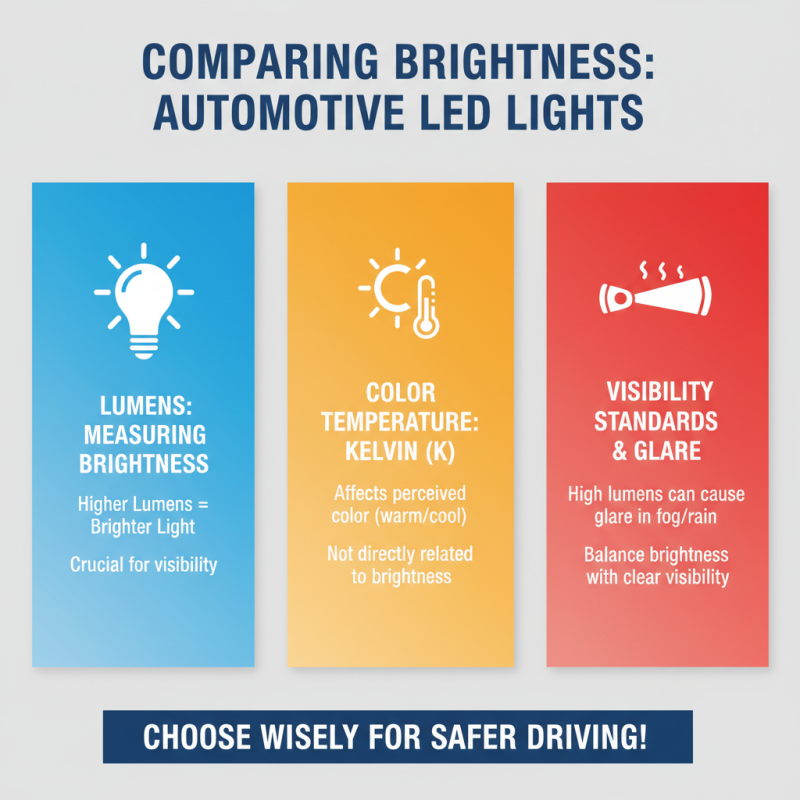
When choosing LED lights for your car, brightness is a crucial factor. Measured in lumens, brightness determines how well you can see on the road. Higher lumens mean brighter lights, but it isn’t just about the number. You need to consider how that brightness affects visibility in different conditions. A light rated at 3,000 lumens might be dazzling in clear weather but could cause glare in fog or rain.
Color temperature also plays an important role. It is measured in Kelvin (K). A temperature around 6,000K produces a cool white light similar to daylight. This enhances visibility and makes objects appear clearer. Lights with lower temperature values appear yellowish, which might feel softer but could hinder visibility. Evaluate your local weather conditions, as color temperature can affect your driving experience.
Visibility standards are often overlooked. Not all LED lights meet the legal requirements for road use. Installing lights that are too bright may dazzle oncoming drivers. Additionally, some LED lights may not provide the right beam pattern. Improperly placed lights can lead to poor visibility. It’s essential to test your lights after installation. Make adjustments to ensure they work effectively in real driving situations. Reflect on how your choices affect safety for you and others on the road.
Energy Efficiency and Lifespan: Evaluating LED Lighting Options for Cars
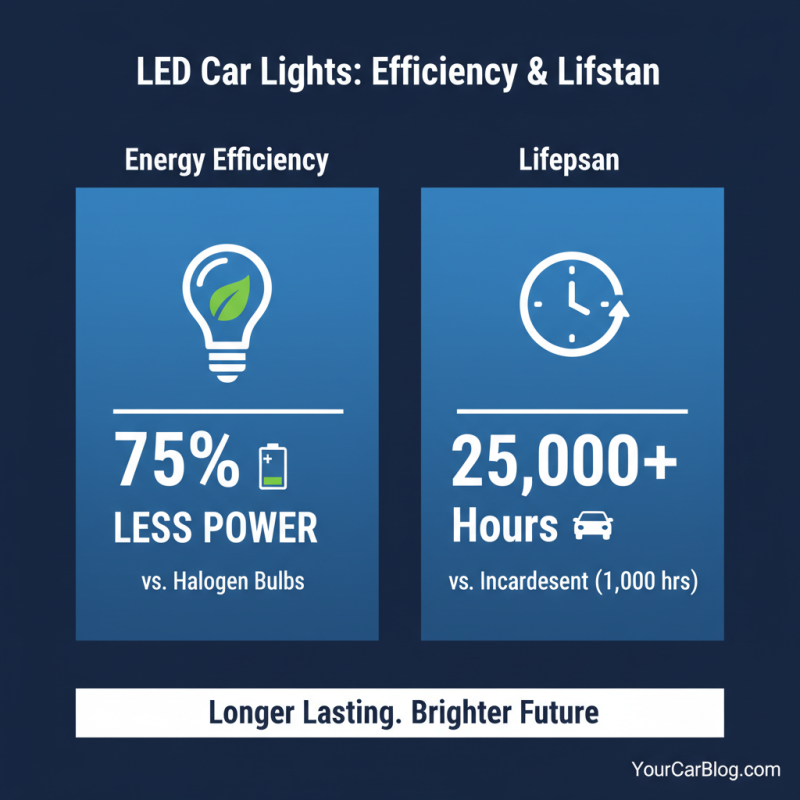
When choosing LED lights for your car, energy efficiency and lifespan are crucial factors. LEDs are known for their low energy consumption, typically using 75% less energy than traditional halogen bulbs. This efficiency translates to longer-lasting performance. Most LED lights can last over 25,000 hours compared to only 1,000 hours for incandescent bulbs.
Evaluating options based on lumen output is vital. A lumen measures brightness, and the higher the lumen count, the brighter the light. For automotive use, lights with 800 to 1500 lumens are common. However, it's essential to find a balance; excessively bright lights can cause glare and reduce safety during night driving.
**Tip:** Check the color temperature when selecting LED lights. A temperature of 5,000 to 6,500 Kelvin is ideal for visibility, mimicking daylight.
Consider the installation process too. Some LED options require professional help, which can add extra cost. Therefore, research easy-to-install models.
**Tip:** Read customer reviews to gauge performance and reliability. Not all products meet advertised lifespans. Reflect on previous experiences with automotive lighting; it can guide better choices this time.
Installation and Compatibility: Ensuring Proper Fit for Your Vehicle Model
When it comes to choosing LED lights for your car, installation and compatibility are crucial. Every vehicle model has specific requirements. It’s not just about picking a bright light; it’s about ensuring a proper fit. Measure the space available for the lights. Check the bulb size guidelines for your model. This step can save time and frustration later.
Consider the type of LED lights that suit your needs. Some lights may not fit well in certain vehicles. Compatibility issues could lead to flickering or failure to illuminate. Inspect the wiring harness and connectors. Make sure they align with your vehicle’s specifications. Poor connections can cause performance problems, affecting both safety and aesthetics.
Sometimes, you might skip the details in a rush. This can lead to mistakes. For instance, buying lights without checking their longevity can be regretful. Remember, installation kits vary. Using the wrong kit might mean extra work. Take time to double-check everything. It can prevent unplanned trips to the garage. Prioritizing compatibility will enhance your car's overall lighting experience.
How to Choose the Best LED Lights for Your Car? - Installation and Compatibility: Ensuring Proper Fit for Your Vehicle Model
| LED Light Type |
Brightness (Lumens) |
Color Temperature (Kelvin) |
Lifespan (Hours) |
Compatibility |
| H4 LED Headlight |
3200 |
6000K |
30000 |
Universal Fit |
| H11 LED Fog Light |
2200 |
5000K |
25000 |
Specific Models |
| 7443 LED Tail Light |
1800 |
3000K |
20000 |
Wide Compatibility |
| T10 LED Interior Light |
400 |
4000K |
50000 |
Universal Fit |
| 9005 LED High Beam |
3500 |
6500K |
30000 |
Specific Models |