Ultimate Guide to Choosing the Best Led Off Road Lighting Tips and Tricks
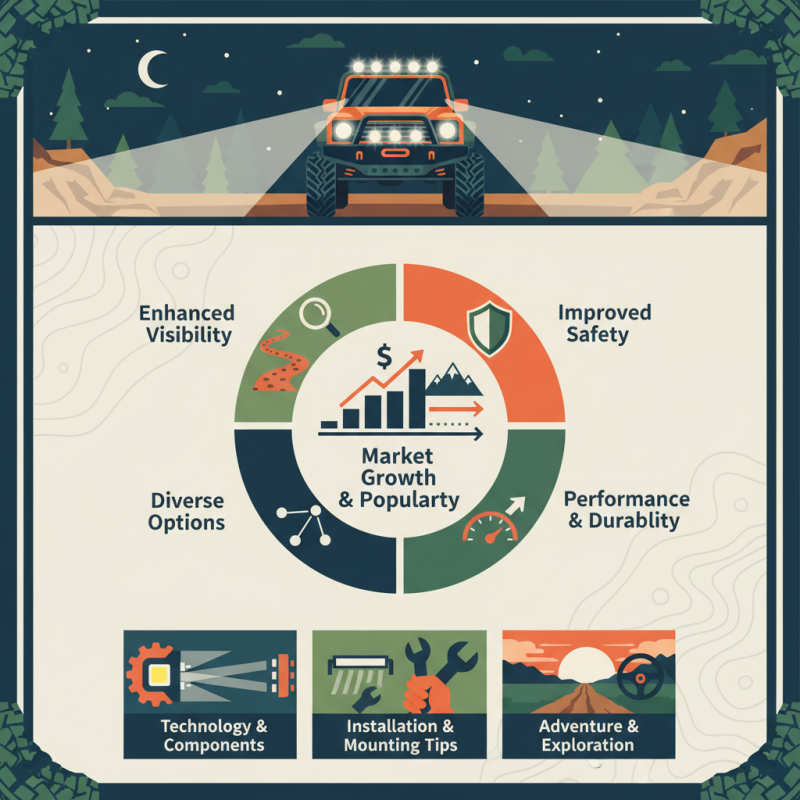
When it comes to enhancing visibility and safety during off-road adventures, "Led Off Road Lighting" is an essential component that every outdoor enthusiast should consider. According to a recent market report by Grand View Research, the global LED off-road lighting market size was valued at over $1 billion in 2022 and is projected to grow significantly over the next decade. This growth is driven by the increasing popularity of off-road vehicles and the rising demand for high-performance lighting solutions that can withstand rugged conditions.
Expert in automotive lighting, Dr. Emily Carter, highlights the importance of selecting the right LED off-road lights: "The right lighting can not only improve visibility but also enhance the overall driving experience on challenging terrains." As off-road enthusiasts seek to push the boundaries of adventure, understanding the various options available in the market becomes crucial. This guide will provide valuable insights, tips, and tricks to help you navigate the diverse landscape of LED off-road lighting, ensuring that your next venture off the beaten path is both safe and exhilarating.
Choosing the Right LED Off-Road Lights: Key Factors to Consider
When selecting the right LED off-road lights, there are several key factors to consider to ensure optimal performance and safety. First, evaluate the brightness of the lights, typically measured in lumens. Higher lumens provide increased visibility, which is essential for navigating rugged terrains at night. However, it is important to find a balance; excessively bright lights may cause glare for oncoming traffic or hinder your own visibility.
Next, consider the beam pattern of the lights. Off-road LED lights come in various configurations, including spot, flood, or combination beams.
Spotlights project a narrow beam over a longer distance, ideal for spotting obstacles, while floodlights cast a wider beam to illuminate a larger area. Depending on your style of off-roading and the conditions you frequently encounter, choosing the right beam pattern will enhance your driving experience. Additionally, ensure that the lights are built to withstand harsh environmental conditions, with robust housing and a high IP rating for dust and water resistance, ensuring longevity and reliability on all your adventures.
Understanding Lumens and Lux: How Brightness Affects Visibility
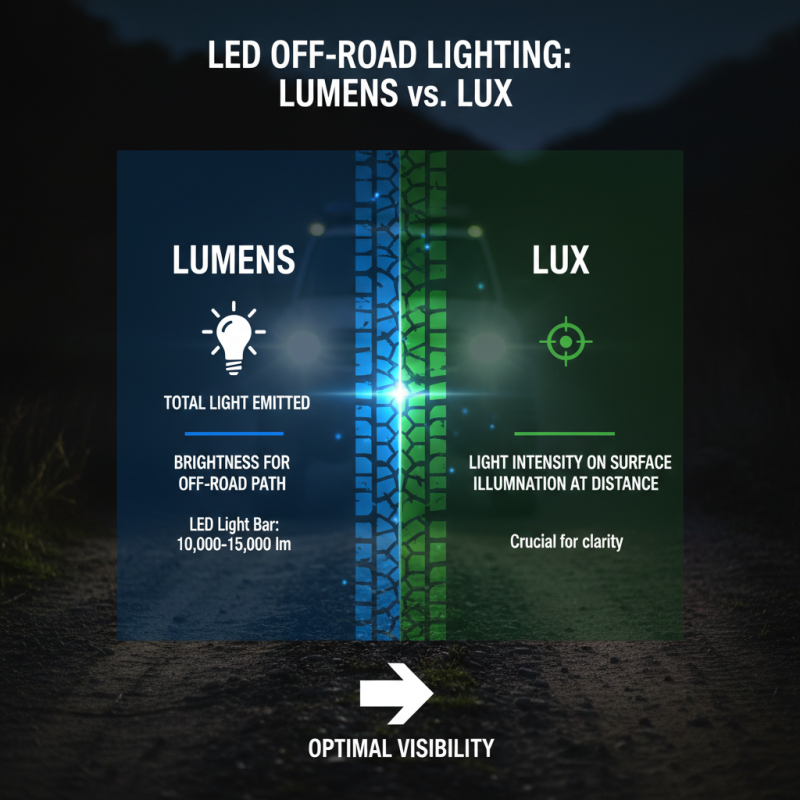
When choosing LED off-road lighting, understanding the concepts of lumens and lux is crucial for ensuring optimal visibility. Lumens measure the total amount of visible light emitted by a source, while lux represents the intensity of light reaching a surface area. For off-roading, a higher lumen count typically indicates brighter lighting, essential for illuminating the path ahead in dark or rugged environments. For instance, a quality LED light bar may emit around 10,000 to 15,000 lumens, providing users with the necessary brightness to navigate challenging terrains safely.
However, it’s not just about sheer brightness; lux ratings give insight into how effectively that light illuminates the area around you. A well-designed off-road light should not only produce high lumens but also distribute light efficiently, resulting in higher lux values at a distance. According to industry reports, a lux level of at least 50 at a distance of 10 meters is ideal for off-road driving, ensuring that drivers can spot potential obstacles well in advance. By paying attention to these measurements, off-road enthusiasts can enhance their visibility on the trails, ultimately leading to safer driving experiences.
Beam Patterns Explained: Spot vs. Flood Lights in Off-Road Applications
When it comes to off-road driving, selecting the right LED lights is crucial for safety and performance. The two main beam patterns, spot and flood lights, serve distinct purposes that can significantly affect your visibility and driving experience.
Spot lights concentrate the beam in a narrower area, producing a longer reach. This pattern is ideal for scenarios where you need to see far ahead, such as navigating through rugged terrain or spotting obstacles at a distance.
On the other hand, flood lights provide a wider beam that illuminates a larger area closer to your vehicle. This is particularly beneficial for low-speed scenarios, where you need to ensure complete visibility of your surroundings, such as camping sites or while performing repairs. Each pattern has its strengths, and often, a combination of both types can provide the ultimate lighting solution for various situations on and off the road.
Tips: When selecting your lights, consider your typical off-road environments. For deep trails or steep hills, integrating spot lights can help you identify hazards early, while flood lights are perfect for navigating through tight spaces or around campsites. Additionally, look for adjustable mounting options that allow you to alter the angle of the lights, maximizing their effectiveness based on the terrain.
Durability Ratings: IP67 vs. IP68 for Extreme Off-Road Conditions
When venturing into extreme off-road conditions, the durability of your LED lighting system is paramount. One of the key factors to consider is the Ingress Protection (IP) rating, specifically IP67 and IP68. These ratings indicate the level to which the device is resistant to dust and water. According to the International Electrotechnical Commission (IEC), IP67 means that the device can withstand being submerged in water up to 1 meter for 30 minutes, while IP68 allows for submersion beyond 1 meter, typically up to 3 meters, depending on the manufacturer's specifications. This makes IP68-rated lights exceptionally suited for off-road enthusiasts who encounter deep water crossings or harsh weather conditions.
Studies have shown that components rated at IP68 tend to perform better under extreme environments, significantly reducing the risk of failure due to water infiltration. For instance, a report from the Lighting Industry Association indicated that over 70% of lighting failures in off-road applications are linked to moisture damage. Thus, when choosing lighting for rugged terrain, investing in IP68-rated products can enhance not only the performance of your vehicle's lighting system but also its longevity. In extreme conditions, the added protection of an IP68 rating may prove invaluable, ensuring that your off-road adventures are illuminated safely and reliably.
Power Consumption and Efficiency: Balancing Performance and Battery Life
When selecting LED off-road lighting, power consumption and efficiency are critical factors to ensure optimal performance while preserving battery life. According to the U.S. Department of Energy, LED lights consume up to 75% less energy than traditional halogen bulbs and can last up to 25 times longer. This efficiency is particularly advantageous in off-road scenarios where prolonged use of lights can significantly drain batteries. Maintaining a balance between brightness and energy consumption results in a reliable lighting solution that does not compromise performance in rugged terrains.
To enhance power efficiency, consider the lumens output relative to wattage. A higher lumen-per-watt ratio indicates a more efficient light. Aim for LED lights that provide at least 100 lumens per watt to maximize brightness while keeping power usage low. Additionally, incorporating smart lighting controls and dimming capabilities can further enhance battery longevity by adjusting brightness based on the surrounding environment.
Tip: To prolong battery life during extended off-road trips, utilize auxiliary power sources or portable solar chargers to recharge batteries during downtime. This practice not only extends lighting capabilities but also reduces the risk of being stranded due to battery depletion. Regularly assessing your lighting setup for power efficiency can lead to significant improvements in your overall off-road experience.