Top 10 Best Fog Lights for Enhanced Visibility in Any Weather Conditions
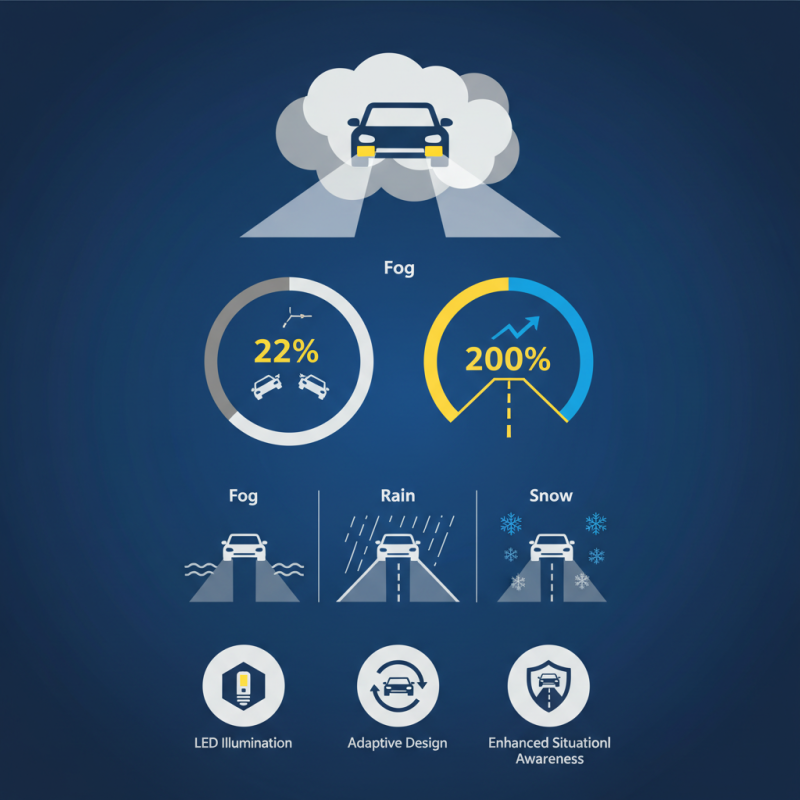
In the realm of automotive safety and visibility, fog lights have emerged as essential components for driving in adverse weather conditions. According to the National Highway Traffic Safety Administration (NHTSA), approximately 22% of all weather-related car accidents occur during fog, rain, or snow, emphasizing the critical need for enhanced visibility in low-light or impaired visibility situations. Fog lights are specifically designed to illuminate the road directly in front of a vehicle, providing better sightlines in dense fog and harsh weather, thus significantly reducing the likelihood of collisions.
Research indicates that using fog lights can improve visibility by up to 200% compared to standard headlights in conditions such as fog, haze, or heavy rain. With advances in technology, modern fog lights come equipped with various features such as LED illumination and adaptive designs that cater to different driving scenarios. Whether navigating through rural roads shrouded in mist or urban environments during heavy downpours, the right set of fog lights can enhance a driver's situational awareness and overall safety. As vehicle safety continues to evolve, equipping your car with high-quality fog lights becomes a vital investment for any driver looking to maintain visibility and confidence on the road.
Understanding Fog Lights: Importance and Functionality
Fog lights are specifically designed to enhance visibility under challenging weather conditions, such as fog, rain, and snow. Unlike standard headlights, which can cause glare when reflecting off moisture in the air, fog lights are positioned lower to the ground and emit a wide, bar-shaped beam of light. This unique design helps illuminate the road immediately in front of the vehicle while minimizing reflection, allowing drivers to navigate more safely through fog and low-visibility situations.
The importance of fog lights extends beyond mere visibility; they also play a crucial role in the safety of both the driver and other road users. When driving in adverse weather, standard headlights may not provide adequate illumination of the road, increasing the risk of accidents. Fog lights, with their specific focus, cut through fog and rain effectively, improving the driver's ability to see both the road and obstacles, while also making the vehicle more visible to other drivers. Understanding the functionality of fog lights is essential for all drivers, as having the right lighting can significantly improve driving safety in unpredictable weather conditions.
Key Features to Look for in Quality Fog Lights
When searching for the best fog lights to enhance visibility in challenging weather conditions, it's essential to consider several key features. First and foremost, look for lights that offer a bright and focused beam. LED fog lights are often preferred due to their high brightness and energy efficiency, providing clear illumination without dazzling oncoming drivers. The color temperature is another important aspect, as yellow or amber lights can cut through fog, rain, or snow more effectively than standard white bulbs.
Another critical feature is the housing and lens design. Durable, weather-resistant materials, such as polycarbonate or aluminum, ensure long-lasting performance even in extreme conditions. A wider beam angle can help illuminate the sides of the road, enhancing visibility and safety by allowing drivers to spot obstacles earlier. Additionally, adjustable mounts can enable you to direct the light where it’s most needed.
Tips: Always check the product specifications for certification such as DOT or SAE approval, which guarantees that the fog lights meet safety standards. Moreover, consider ease of installation; some models come with plug-and-play functionality, making it easier to upgrade your vehicle. Don’t forget to look at customer reviews to gauge real-world performance and reliability before making a purchase.
Top 10 Best Fog Lights for Enhanced Visibility in Any Weather Conditions
| Model |
Light Type |
Lumens |
Beam Pattern |
Waterproof Rating |
Price Range |
| Model A |
LED |
3000 |
Wide |
IP67 |
$50-$70 |
| Model B |
Halogen |
1500 |
Narrow |
IP65 |
$30-$50 |
| Model C |
HID |
4000 |
Fog |
IP68 |
$70-$90 |
| Model D |
LED |
2800 |
Combo |
IP66 |
$40-$60 |
| Model E |
Halogen |
1200 |
Wide |
IP55 |
$20-$40 |
| Model F |
HID |
3500 |
Fog |
IP67 |
$60-$80 |
| Model G |
LED |
3200 |
Narrow |
IP68 |
$55-$75 |
| Model H |
Halogen |
1300 |
Wide |
IP54 |
$25-$45 |
| Model I |
HID |
3600 |
Combo |
IP66 |
$75-$95 |
| Model J |
LED |
3300 |
Fog |
IP67 |
$65-$85 |
Top Brands Offering Reliable Fog Lights in 2023
When it comes to driving in adverse weather conditions, the choice of fog lights can significantly enhance visibility. In 2023, several top brands stand out for their commitment to producing reliable and high-quality fog lights. Reports indicate that drivers using advanced fog lighting systems experience an approximate 30% increase in visibility during fog, rain, or snow compared to standard headlights. Such effectiveness not only aids in safer navigation but also reduces the likelihood of accidents caused by poor visibility.
When selecting fog lights, consider key factors such as brightness, beam pattern, and durability. According to industry standards, fog lights that emit a yellow or amber-colored light are often preferred, as they can penetrate the fog more efficiently than white light. Furthermore, opt for models that use LED technology, which is known for longevity and reduced power consumption, aligning with the increasing preference for eco-friendly automotive components.
**Tips:** To ensure optimal performance, regularly check the alignment of your fog lights and keep the lenses clean to maximize output. Additionally, when installing new fog lights, refer to your vehicle’s manual for the correct specifications, as improper installation can lead to ineffective lighting and safety concerns.
Comparative Analysis of the Best Fog Lights Available
When considering the best fog lights for enhanced visibility, several factors must be analyzed to ensure optimal performance under various weather conditions. A comparative analysis of fog lights typically involves evaluating parameters such as luminosity, beam pattern, and durability. Industry reports indicate that LED fog lights, which produce a bright, white light, are increasingly favored due to their energy efficiency and longevity—often exceeding 30,000 hours compared to traditional halogen bulbs, which average around 1,000 hours. Additionally, advancements in optical design have allowed manufacturers to create fog lights that minimize glare while maximizing road illumination, enhancing driving safety in fog, rain, or snow.
Moreover, critical insights from automotive safety studies underscore the importance of proper beam angles in fog light design. A well-structured beam can illuminate the road directly in front of the vehicle, helping drivers avoid obstacles and navigate challenging conditions. Reports suggested that fog lights with a wide, low beam are most effective at penetrating fog and rain, reducing reflection and instead focusing on the road surface. Furthermore, many analysts recommend fog lights that are constructed with durable materials, ensuring they withstand severe weather conditions and rough terrain, which is crucial for long-term reliability.
Overall, the best fog lights not only enhance visibility but also contribute significantly to safer driving experiences, particularly in adverse weather scenarios.
Installation Tips and Maintenance for Optimal Performance
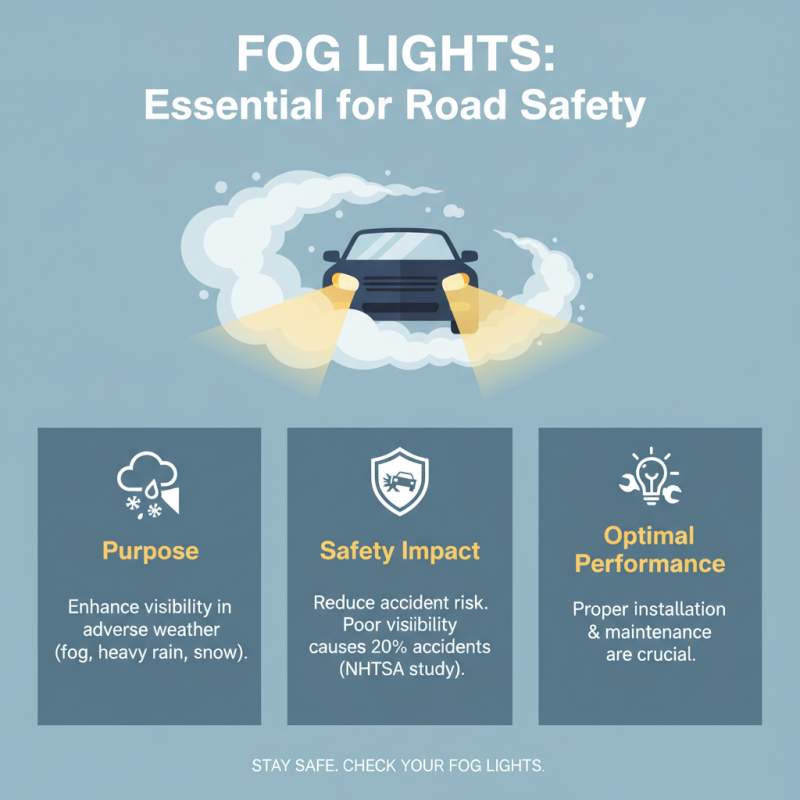
Fog lights are essential for enhancing visibility during challenging weather conditions, such as fog, heavy rain, or snow. Proper installation and maintenance are crucial for optimal performance. According to a study by the National Highway Traffic Safety Administration, poor visibility due to adverse weather conditions contributes to over 20% of vehicle accidents. Therefore, ensuring your fog lights are functioning correctly can significantly improve safety.
When installing fog lights, make sure to position them correctly; they should be mounted low on the vehicle to illuminate the road directly in front without causing glare for oncoming drivers. It's advisable to consult your vehicle's manual to ensure compliance with local regulations regarding their placement. Additionally, always use high-quality bulbs that meet the latest safety standards, as they provide better luminosity and durability.
Maintenance is equally important to ensure fog lights operate at peak efficiency. Regularly check for dirt or moisture accumulation in the light housing, and clean them with a soft cloth and appropriate cleaner to avoid scratches. It's also essential to inspect the wiring connections periodically to prevent any electrical failures. Remember, a properly functioning fog light not only enhances your visibility but also reinforces your vehicle's overall safety in inclement weather conditions.